Safaricom CEO Peter Ndegwa pockets $2.5 million salary in 2026
Safaricom CEO Peter Ndegwa earned $2.49 million in fiscal 2026, a 10.3 percent pay rise driven by stock awards as group profit jumped 61 percent.

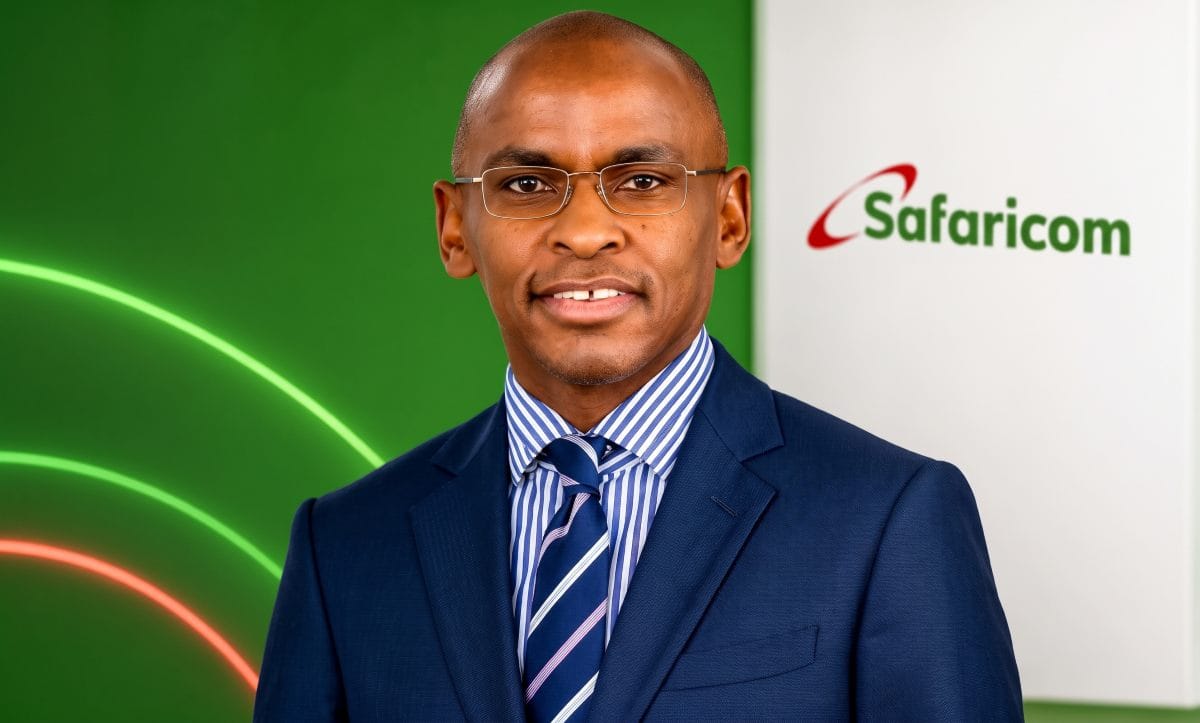
Safaricom CEO Peter Ndegwa took home KSh324.5 million ($2.5 million) for the fiscal year ended March 31, 2026, marking a 10.3 percent pay raise. Stock awards drove the increase as East Africa’s largest telecom company delivered a sharp bottom-line rebound and posted record operating earnings across its regional footprint.
The package added KSh30.3 million ($0.23 million) to the KSh294.2 million ($2.3 million) Ndegwa earned a year earlier, according to Safaricom’s latest remuneration report. Most of the upside came from the Employee Performance Share Award Plan, which surged 52.8 percent to KSh69.2 million ($0.53 million) from KSh45.3 million ($0.35 million) in fiscal 2025.
Inside the executive pay breakdown
Ndegwa’s fixed base salary climbed 6.8 percent to KSh105.4 million ($0.81 million), up from KSh98.7 million ($0.76 million) the previous year. His annual cash bonus edged up 1.5 percent to KSh118.5 million ($0.91 million), remaining the largest slice of his total package at roughly 36.5 percent of overall compensation.
Non-cash perks were the only pay component to shrink, slipping 6.3 percent to KSh31.4 million ($0.24 million) from KSh33.5 million ($0.26 million). Ndegwa, who joined the Nairobi-based carrier in April 2020 and sits on Vodacom Group’s executive committee, brings three decades of leadership across telecom, banking, and consumer goods.
Profit rebounds on Ethiopian turnaround
Under Ndegwa’s watch, Safaricom has pivoted aggressively from legacy voice calls toward mobile finance and enterprise technology. That strategy paid off in fiscal 2026 as group net profit jumped 61 percent to $566.5 million, rebounding from KSh45.76 billion ($351.81 million) while narrowing steep startup losses in Ethiopia.
Operating profit surged 40.6 percent to KSh146.32 billion ($1.12 billion) from KSh104.05 billion ($800 million), while pretax earnings rose 36.1 percent to KSh126.82 billion ($975.05 million). Although minority interests absorbed a KSh21.93 billion ($168.63 million) loss, profit attributable to parent shareholders climbed 37 percent to KSh95.61 billion ($735.09 million).
M-Pesa and data lead growth
Top-line momentum held steady as group revenue grew 10 percent to KSh427.56 billion ($3.29 billion) and service revenue gained 11.5 percent to KSh414.14 billion ($3.18 billion). Earnings before interest, taxes, depreciation, and amortization jumped 27.9 perent to KSh220.26 billion ($1.69 billion), lifting operating margins by 7.2 percentage points to 51.5 percent.
M-Pesa remained Safaricom’s primary growth engine, with mobile money revenue rising 13.4 percent to KSh182.74 billion ($1.41 billion). Connectivity sales increased 9.8 percent to KSh211.39 billion ($1.63 billion), powered by an 18.3 percent jump in mobile data to KSh92.91 billion ($714.37 million) alongside gains in fixed broadband.
Balance sheet supports network spending
Those digital gains easily cushioned an 11.1 percent drop in text messaging revenue to KSh11.17 billion ($85.88 million) and a 47.3 percent slump in handset sales. Voice revenue also proved resilient, eking out a 3.5 percent increase to KSh84.82 billion ($652.18 million) despite intense pricing pressure across Kenyan telecom networks.
On the balance sheet, total group assets edged up to KSh518.05 billion ($3.98 billion) from KSh515.28 billion ($3.96 billion) a year earlier. Non-current assets reached KSh438.1 billion ($3.37 billion) on continued network investments, while total equity rose 3.1 percent to KSh230.92 billion ($1.78 billion) as retained earnings hit KSh165.74 billion ($1.27 billion).
U.S. dollar conversions reflect an exchange rate of KSh1 = $0.00768787.